
Sep . 08, 2025 12:44 Back to list
Accurate Mycobacterium Tuberculosis Detection & PCR Tests
Industry Trends in Mycobacterium Tuberculosis Detection
The global fight against tuberculosis (TB) remains a critical public health challenge, with an estimated 10 million people falling ill with TB annually. Accurate and rapid mycobacterium tuberculosis detection is paramount for timely treatment initiation, preventing transmission, and controlling outbreaks. Recent years have seen a significant shift from traditional, slow culture-based methods to advanced molecular diagnostics, driven by the urgent need for faster, more sensitive, and highly specific assays. This evolution is particularly crucial for detecting drug-resistant strains, which pose a growing threat.
Key trends shaping the landscape of TB diagnostics include: the proliferation of PCR-based technologies for direct detection from clinical samples, advancements in multi-drug resistance (MDR) and extensively drug-resistant (XDR) TB screening, and the development of point-of-care (POC) solutions. The market is witnessing increased demand for integrated platforms that offer both detection and resistance profiling. Furthermore, the emphasis on ease of use, reduced turnaround time, and cost-effectiveness is driving innovation, making sophisticated diagnostics accessible in resource-limited settings. Genomic sequencing, while currently more research-oriented, is also emerging as a powerful tool for detailed strain analysis and outbreak investigation, promising even greater precision in the future of mycobacterium tuberculosis detection.
The adoption of lyophilized reagents, such as those found in the Cowingene Mycobacterium Tuberculosis Detection Kit, represents a significant advancement. This format enhances kit stability, simplifies logistics by eliminating cold chain requirements during shipping and storage, and reduces preparation time in the laboratory, thereby improving workflow efficiency and overall reliability in diverse geographical locations. These innovations are critical for global TB eradication efforts.
Detailed Process Flow: Mycobacterium Tuberculosis Detection Using PCR
The process of detecting mycobacterium tuberculosis pcr involves several critical steps, ensuring high sensitivity and specificity. This typically begins with sample collection and preparation, followed by DNA extraction, PCR amplification, and finally, result interpretation. The Cowingene Mycobacterium Tuberculosis Detection Kit (Lyophilized) streamlines several of these stages through its innovative design.
Kit Manufacturing Process & Quality Control:
The manufacturing of diagnostic kits like the Cowingene Mycobacterium Tuberculosis Detection Kit adheres to stringent quality management systems to ensure product integrity and performance. Key aspects include:
- Product Materials (Reagents): High-purity oligonucleotides (primers and probes) are synthesized, along with reverse transcriptase enzymes, DNA polymerase, and reaction buffers. For lyophilized kits, these components are precisely mixed and then subjected to a freeze-drying process to remove water, creating a stable, dry pellet. This minimizes degradation and extends shelf life.
- Manufacturing Processes (Lyophilization, Aseptic Packaging): The lyophilization process is performed under controlled aseptic conditions to prevent contamination. Post-lyophilization, individual reaction tubes or strips are sealed in humidity-controlled packaging, often with desiccants, to maintain stability. This meticulous process ensures the integrity of the sensitive biological components.
- Testing Standards (ISO 13485, CE-IVD): Every batch undergoes rigorous quality control testing. This includes sensitivity assays to determine the limit of detection (LOD), specificity tests to ensure no cross-reactivity with non-TB mycobacteria or other common respiratory pathogens, and stability testing. Manufacturing facilities typically hold ISO 13485 certification for medical device quality management, and products are often CE-IVD marked, signifying compliance with European Union in vitro diagnostic directives.
- Service Life: Due to lyophilization, the Cowingene kit typically boasts an extended shelf life of 12-24 months when stored at recommended temperatures (e.g., 2-8°C), significantly longer than liquid reagent counterparts, which often require deep-freeze storage.
Typical Application Scenario & Advantages:
Consider a clinical diagnostic laboratory in a remote area. The lyophilized format of the Cowingene kit offers distinct advantages:
- Energy Saving: No need for -20°C freezers during transit or long-term storage, reducing energy consumption and operational costs, especially vital in areas with unreliable power.
- Simplified Logistics: Easier and cheaper to transport, avoiding cold chain breaks that can compromise reagent efficacy.
- Reduced Hands-on Time: Reagents are pre-dispensed and dry, requiring only the addition of extracted DNA and rehydration buffer, minimizing pipetting steps and potential for human error or contamination.
- Consistent Performance: The manufacturing process, adhering to standards like ISO 13485, ensures batch-to-batch consistency and reliable results, which is crucial for public health decision-making.
Target Industries for TB PCR Detection:
- Clinical Diagnostic Laboratories: For routine and urgent TB diagnosis.
- Public Health Surveillance Centers: For epidemiological studies and outbreak management.
- Research Institutions: For studies on TB pathogenesis, drug resistance, and vaccine development.
- Point-of-Care (POC) Settings (with compatible systems): Expanding access to rapid diagnostics in decentralized healthcare facilities.
This detailed process, from kit manufacturing to clinical application, underscores the technical sophistication and strategic importance of advanced solutions for tuberculosis pcr test.
Technical Specifications and Parameters
The Cowingene Mycobacterium Tuberculosis Detection Kit (Lyophilized) is engineered for high performance in molecular diagnostic settings. Understanding its technical parameters is crucial for laboratory professionals evaluating its suitability. This kit leverages real-time PCR technology, targeting highly conserved regions of the Mycobacterium tuberculosis complex genome, ensuring robust and specific detection.
Key Product Specifications: Cowingene Mycobacterium Tuberculosis Detection Kit (Lyophilized)
These specifications underscore the kit's design for robust and reliable performance in critical diagnostic applications. The inclusion of an internal control is particularly vital for validating results, mitigating false negatives due to inhibition or extraction failures.
Application Scenarios and Technical Advantages
The Cowingene Mycobacterium Tuberculosis Detection Kit offers significant technical advantages across various critical application scenarios, making it an indispensable tool for rapid and accurate TB diagnosis.
Application Scenarios:
- Early Diagnosis of Active TB: For patients presenting with symptoms suggestive of TB, rapid molecular detection significantly reduces the diagnostic delay compared to conventional culture, allowing for earlier treatment initiation and isolation, thereby curbing transmission.
- Diagnosis of Extrapulmonary TB (EPTB): EPTB, which affects organs outside the lungs, is notoriously difficult to diagnose due to paucibacillary samples and varied clinical presentations. The high sensitivity of real-time PCR is crucial for detecting M. tuberculosis in these challenging samples (e.g., CSF, pleural fluid, biopsy tissue).
- Monitoring Treatment Efficacy: While primarily for initial diagnosis, the quantitative nature of qPCR can, in research settings, provide insights into bacterial load, potentially aiding in monitoring treatment response, though culture conversion remains the gold standard.
- Screening of High-Risk Populations: In settings with high TB prevalence or among immunocompromised individuals (e.g., HIV-positive patients), rapid molecular screening can identify infections early, facilitating prompt intervention.
- Epidemiological Surveillance: Molecular methods provide quick insights into local transmission patterns and can contribute to public health surveillance efforts.
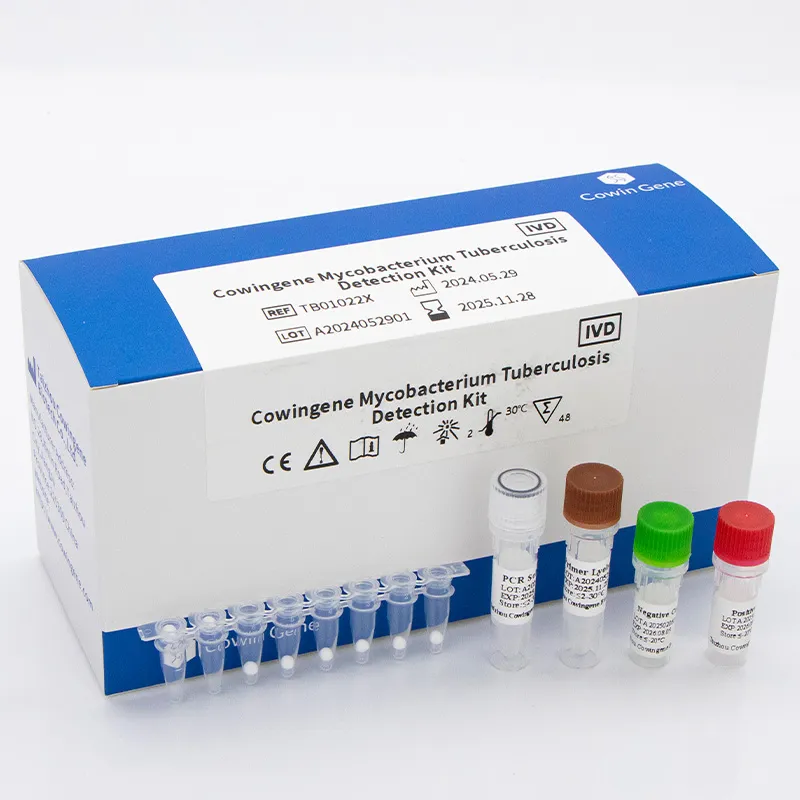
Technical Advantages of Cowingene Kit:
- High Sensitivity & Specificity: Targets highly conserved genomic regions unique to MTBC, minimizing false positives and ensuring detection even with low bacterial loads, crucial for early-stage infections or paucibacillary samples.
- Rapid Turnaround Time: Delivers results within hours, dramatically reducing the waiting period compared to culture methods (2-8 weeks), enabling faster clinical decisions and public health interventions for mycobacterium tuberculosis pcr.
- Lyophilized Format: This is a significant advantage. It ensures long-term stability at room temperature or refrigerated conditions (2-8°C), negating the need for a strict cold chain during transport and storage, which is particularly beneficial for laboratories in remote or less-developed regions. This also reduces reagent preparation time and minimizes the risk of pipetting errors and contamination.
- Internal Control: Includes an internal control to monitor for PCR inhibition and confirm successful DNA extraction, thereby preventing false-negative results and enhancing the trustworthiness of the diagnostic outcome.
- Compatibility: Designed to be compatible with widely available open-channel real-time PCR systems, allowing for seamless integration into existing laboratory infrastructure without requiring significant capital investment in new equipment.
- Reduced Contamination Risk: The pre-aliquoted, lyophilized format minimizes the handling of individual reagents, thereby reducing the potential for cross-contamination in the laboratory environment.
Vendor Comparison and Customized Solutions
Choosing the right diagnostic kit for mycobacterium tuberculosis detection involves evaluating various vendor offerings based on performance, usability, cost, and support. While many kits exist, Cowingene distinguishes itself through specific features and flexible solutions.
Competitive Landscape and Vendor Comparison:
The market for TB molecular diagnostics includes global players offering a range of PCR and isothermal amplification-based tests. Here's a generalized comparison:
Cowingene’s lyophilized kit offers an optimal balance between performance, cost-effectiveness, and logistical convenience, particularly appealing to laboratories with existing qPCR infrastructure and a need for stable, easy-to-use reagents. While automated cartridge systems offer the ultimate ease, they often come with significant capital expenditure and vendor lock-in.
Customized Solutions:
Understanding that every laboratory has unique requirements, Cowingene offers a degree of flexibility for tailored solutions:
- Packaging Variants: Kits can be supplied in different reaction quantities (e.g., 50 tests, 100 tests) to match laboratory throughput and minimize waste.
- Integration Support: Assistance with validating the kit on specific real-time PCR platforms not explicitly listed as compatible, ensuring seamless integration into diverse lab setups.
- Bulk Orders & OEM Services: For large-scale procurement by public health programs or for diagnostic companies looking to white-label a reliable tuberculosis pcr test, Cowingene provides competitive bulk pricing and OEM (Original Equipment Manufacturer) services, allowing for branding and customization under client specifications.
- Reagent Optimization: For specialized research applications, discussions can be held regarding minor modifications or optimizations to meet specific research parameters, maintaining the core performance of the mycobacterium tuberculosis detection.
Application Case Studies & Customer Feedback
Real-world application demonstrates the tangible benefits of the Cowingene Mycobacterium Tuberculosis Detection Kit. Our solutions have been deployed in diverse settings, providing rapid and reliable diagnostic capabilities.
Case Study 1: Provincial Public Health Laboratory, Southeast Asia
Challenge: A provincial public health laboratory in a region with high TB incidence struggled with delayed diagnosis due to reliance on smear microscopy and slow culture methods. The long turnaround time (TAT) hampered effective patient management and contact tracing. Cold chain logistics were also a significant challenge, leading to reagent degradation and inconsistent results with other liquid PCR kits.
Solution: The laboratory implemented the Cowingene Mycobacterium Tuberculosis Detection Kit (Lyophilized). Its room-temperature stability during shipping and the ability to be stored at 2-8°C eliminated cold chain issues. The simplified workflow for the tuberculosis pcr test, requiring minimal pipetting, significantly reduced hands-on time and the potential for error.
Outcome: The TAT for TB diagnosis was reduced from 3-6 weeks to less than 24 hours (including DNA extraction). This led to a 40% increase in patients initiated on appropriate anti-TB treatment within 72 hours of sample collection in the first six months. The high sensitivity of the kit also improved the detection rate of paucibacillary samples, particularly in extrapulmonary cases that were previously missed by microscopy.
“The Cowingene lyophilized kit has revolutionized our TB diagnostic capabilities. The ease of use and, crucially, the stability without a deep-freeze chain, made it perfectly suited for our infrastructure. We are now able to provide rapid results, drastically improving patient outcomes and our ability to control local transmission.”
Case Study 2: Research Institute, Western Europe
Challenge: A prominent research institute focused on infectious diseases required a highly sensitive and consistent mycobacterium tuberculosis pcr assay for a large-scale epidemiological study involving archived clinical samples. Variability across reagent batches from previous vendors was a concern, impacting data comparability.
Solution: Cowingene supplied bulk quantities of its Mycobacterium Tuberculosis Detection Kit (Lyophilized) after successful validation by the institute. The inherent stability and rigorous ISO 13485 manufacturing controls of the lyophilized format ensured exceptional batch-to-batch consistency.
Outcome: The study achieved high-quality, reproducible data, enabling robust analysis of TB prevalence and genetic diversity across the sample cohort. The internal control within the kit provided an additional layer of confidence in negative results from challenging or degraded samples, which was crucial for their research integrity.
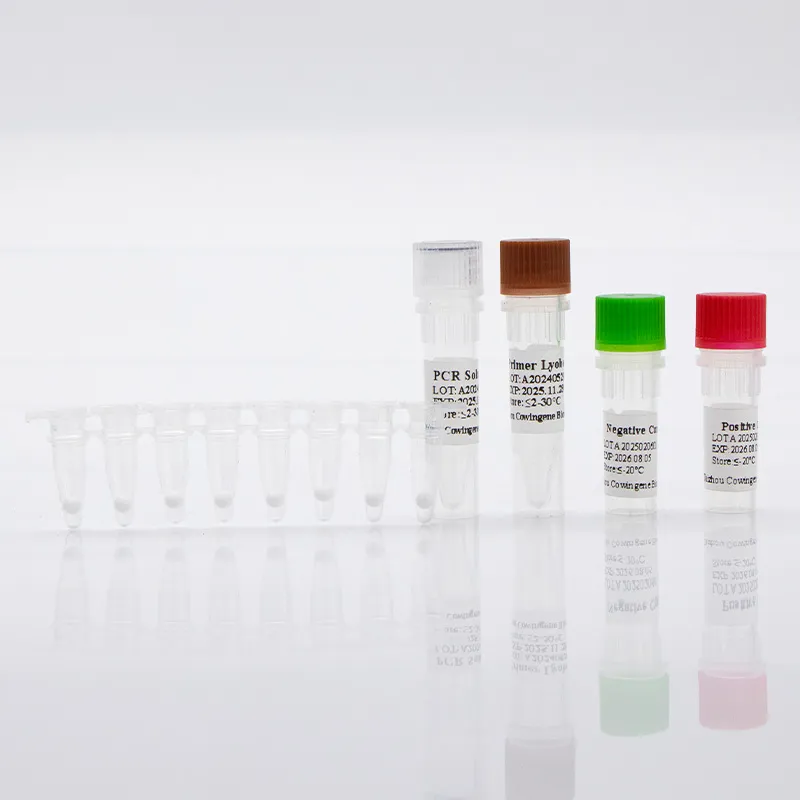
Trustworthiness and Support ( Elements)
Cowingene is committed to providing not just high-quality products for mycobacterium tuberculosis detection, but also comprehensive support and transparent operational policies to foster strong B2B relationships.
Certifications and Authoritative References:
- Cowingene operates under a strict ISO 13485 certified Quality Management System, ensuring all products, including the Mycobacterium Tuberculosis Detection Kit, meet international standards for medical device manufacturing.
- Our products are CE-IVD marked, affirming compliance with the essential requirements of the European In Vitro Diagnostic Medical Devices Directive.
- Years of service in the molecular diagnostics industry, coupled with numerous peer-reviewed publications referencing our technologies, underscore our authoritative standing.
- Partnerships with leading healthcare institutions and public health organizations globally validate the reliability and utility of our diagnostic solutions.
Frequently Asked Questions (FAQ):
- Q: What sample types are compatible with the Cowingene Mycobacterium Tuberculosis Detection Kit?
- A: The kit is validated for a wide range of clinical samples including sputum, bronchoalveolar lavage fluid (BALF), cerebrospinal fluid (CSF), tissue biopsies, urine, and others. Proper DNA extraction from these matrices is crucial for optimal performance.
- Q: Does the kit differentiate between M. tuberculosis complex and non-tuberculous mycobacteria (NTM)?
- A: Yes, the primers and probes are specifically designed to target conserved regions unique to the Mycobacterium tuberculosis complex, ensuring high specificity and no cross-reactivity with common NTMs.
- Q: What real-time PCR instruments are compatible with this kit?
- A: The kit is designed for use with most open-channel real-time PCR systems that support FAM and VIC/HEX detection channels, including instruments from Applied Biosystems (e.g., QuantStudio series), Bio-Rad (e.g., CFX series), and Roche LightCycler systems.
- Q: What is the recommended storage condition and shelf life?
- A: The lyophilized kit components should be stored at 2-8°C. Under these conditions, the kit has a shelf life of up to 24 months from the manufacturing date.
Lead Time & Fulfillment:
Standard lead time for stock items is typically 3-5 business days for domestic shipments and 7-14 business days for international orders, subject to customs clearance. For bulk or OEM orders, lead times will be confirmed upon order placement, with robust inventory management systems ensuring timely fulfillment.
Warranty & Customer Support:
- Warranty: Cowingene provides a comprehensive warranty against manufacturing defects for the entire shelf life of the product, provided it is stored and used according to the provided instructions for the tuberculosis pcr test.
- Technical Support: Our dedicated team of molecular biologists and technical specialists is available to provide expert assistance, from protocol optimization and troubleshooting to data interpretation. Support is accessible via phone, email, and online resources.
- Training: We offer comprehensive training materials and, where feasible, on-site or remote training sessions to ensure laboratories can maximize the utility and performance of our kits.
Conclusion
The Cowingene Mycobacterium Tuberculosis Detection Kit (Lyophilized) represents a significant advancement in molecular diagnostics for tuberculosis. By combining high sensitivity and specificity with the practical advantages of lyophilized reagents, it addresses critical needs in both advanced and resource-limited diagnostic settings. Its contribution to rapid, accurate, and reliable mycobacterium tuberculosis detection is instrumental in accelerating treatment, curbing transmission, and ultimately, moving closer to the global eradication of TB. Through continuous innovation, stringent quality control, and dedicated customer support, Cowingene remains a trusted partner in global health initiatives.
References
- World Health Organization. Global Tuberculosis Report 2023. Geneva: World Health Organization; 2023.
- Li Y, et al. Rapid molecular diagnostic tests for tuberculosis and drug resistance. J Infect Public Health. 2020;13(3):301-311.
- CDC. Tuberculosis (TB): Molecular Detection of Drug Resistance. Centers for Disease Control and Prevention; 2022.
- Standards for the quality management of diagnostic medical devices. ISO 13485:2016. International Organization for Standardization; 2016.
- European Parliament and Council. Directive 98/79/EC on in vitro diagnostic medical devices. Official Journal of the European Communities; 1998.
Related PRODUCTS
-
Rapid HPV 16/18/45 Molecular Detection with NATBox for Targeted Cervical Cancer Screening
NewsApr.24,2026 -
High-Sensitivity HPV (2+16) Molecular Detection for Early Cervical Cancer Screening
NewsApr.24,2026 -
Comprehensive HPV 28 Genotyping Solution for Advanced Cervical Cancer Screening
NewsApr.24,2026 -
Comprehensive HPV 15 Genotyping Solution for Accurate Cervical Cancer Risk Assessment
NewsApr.24,2026 -
Comprehensive 14-Pathogen STI Detection Solution for Accurate Molecular Diagnosis
NewsApr.24,2026 -
Accurate and Reliable HSV-1/2 Molecular Detection for Clinical Diagnosis
NewsApr.24,2026