
Mar . 14, 2026 02:30 Back to list
What is Dengue PCR Test A Comprehensive Guide to Diagnosis and Serotype Detection
What is a Dengue PCR Test? A Comprehensive Guide
Dengue fever, a mosquito-borne viral infection, is a significant public health concern in many tropical and subtropical regions worldwide. Early and accurate diagnosis is crucial for effective management and preventing severe complications. A Dengue PCR test is one of the most sensitive and specific methods available for detecting the dengue virus. This article will delve into the details of this test, explaining its principles, procedure, interpretation, and benefits, offering valuable information for healthcare professionals and individuals concerned about dengue infection. Understanding the science behind the test ensures informed decision-making and prompt medical attention.

Understanding the Basics of PCR Technology
PCR, or Polymerase Chain Reaction, is a molecular biology technique used to amplify specific DNA or RNA sequences. In the context of dengue diagnosis, PCR targets the genetic material (RNA) of the dengue virus. The process involves several steps: denaturation, annealing, and extension. Denaturation separates the double-stranded RNA, annealing allows primers to bind to the target sequence, and extension uses an enzyme (polymerase) to create copies of the target sequence. Each cycle of PCR doubles the amount of target RNA, allowing for the detection of even very small amounts of virus. The accuracy of a Dengue PCR test relies on the specificity of the primers used, ensuring that only the dengue virus RNA is amplified.
Key Highlights: PCR amplifies specific RNA sequences of the dengue virus, allowing for highly sensitive and accurate detection even in early stages of infection. It's a vital tool in confirming dengue diagnoses.
What Does a Dengue PCR Test Detect?
The Dengue PCR test doesn’t just tell you if you have dengue; it can also help identify the specific serotype involved. There are four different serotypes of the dengue virus (DENV-1, DENV-2, DENV-3, and DENV-4). Knowing the serotype is important for epidemiological surveillance and understanding the spread of the virus. Cowin Gene's Dengue PCR test can simultaneously detect and differentiate between all four serotypes. This multiplex PCR approach provides more comprehensive information than tests that only detect the presence of the virus without specifying the serotype.
Dengue Serotype Detection Benefits:
• Identifies the specific dengue virus serotype.
• Aids in epidemiological surveillance.
• Informs clinical management strategies.
Dengue PCR Test vs. Other Diagnostic Methods
Several methods are used to diagnose dengue fever, including NS1 antigen tests, IgM/IgG antibody tests, and PCR. Each has its advantages and limitations. NS1 antigen tests are useful during the early stages of infection (days 1-5), but their sensitivity can decrease later on. Antibody tests become positive later in the course of the illness (after day 5), but may not be reliable in early infection or in individuals previously exposed to dengue. A Dengue PCR test is the most sensitive and specific method, particularly during the first few days of illness, and can also detect the virus even after antibody levels have declined.
The Procedure for a Dengue PCR Test
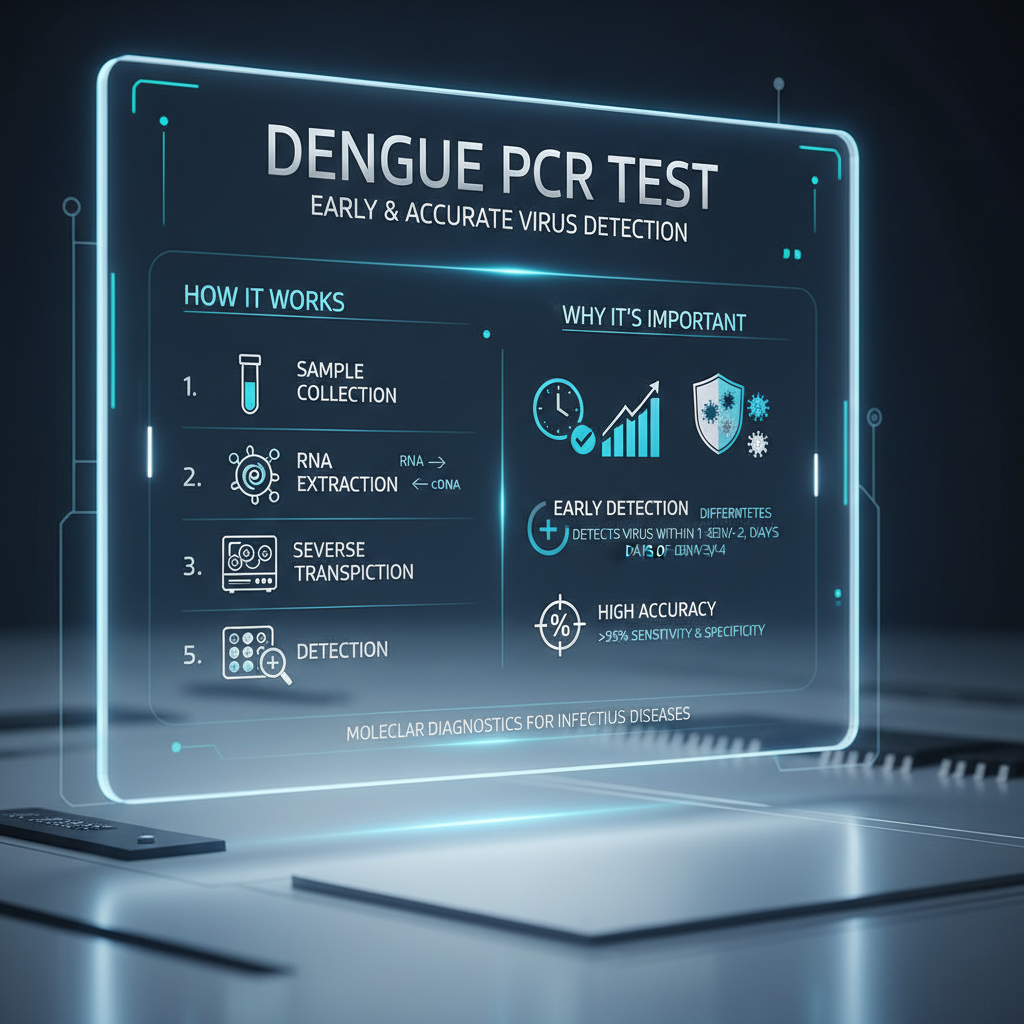
The Dengue PCR test typically involves collecting a blood sample from the patient. The sample is then sent to a laboratory where the RNA is extracted and amplified using PCR. The amplified DNA is then detected, and if present, confirms the presence of the dengue virus. The whole process, from sample collection to result reporting, usually takes a few hours to a day, depending on the laboratory's workflow and equipment.
Interpreting Your Dengue PCR Test Results
A positive PCR result indicates the presence of the dengue virus RNA in the sample, confirming a dengue infection. A negative result suggests that the virus is not present, but does not necessarily rule out dengue, especially if the test is performed late in the illness or if the viral load is very low. It's important to discuss the results with a healthcare professional who can consider the clinical picture and order further testing if needed.
Conclusion: The Importance of Accurate Dengue Diagnosis
Accurate and timely diagnosis of dengue fever is critical for effective patient management and public health surveillance. The Dengue PCR test offered by Cowin Gene provides a highly sensitive and specific method for detecting the virus and identifying its serotype. Early diagnosis allows for appropriate medical care, preventing severe complications and controlling the spread of the disease.
Frequently Asked Questions (FAQs)
How quickly can a Dengue PCR test detect the virus after symptoms start?
A Dengue PCR test is most effective during the first 5-7 days after symptom onset, when the viral load is typically highest. While it can still detect the virus beyond this timeframe, the sensitivity decreases as the viral load declines. Early testing is crucial for accurate diagnosis and timely intervention. The tests offered by Cowin Gene are optimized for high sensitivity in the early stages of infection.
What sample type is required for a Dengue PCR test?
The most common sample type for a Dengue PCR test is a whole blood sample. Serum or plasma samples can also be used. The sample is typically collected by a healthcare professional through a simple venipuncture. Proper sample collection and handling are essential to ensure accurate results.
Can a false negative result occur with a Dengue PCR test?
Yes, a false negative result is possible, although relatively uncommon. This can occur if the viral load is very low, especially if the test is performed late in the illness. It can also happen if the sample was collected or stored improperly. In cases of clinical suspicion despite a negative PCR result, repeat testing or alternative diagnostic methods may be considered.
How does Cowin Gene ensure the accuracy of its Dengue PCR tests?
Cowin Gene employs stringent quality control measures throughout the entire process, from reagent manufacturing to test performance and result reporting. This includes using validated assays, following strict laboratory protocols, and participating in external quality assessment programs to ensure accuracy and reliability.
Related PRODUCTS
-
Precision Diagnostics for Viral Detection Using Cytomegalovirus PCR
NewsApr.16,2026 -
HPV 28 Genotyping Kit - Taizhou Cowingene Biotech Co., Ltd.|Precision & Reliability
NewsApr.14,2026 -
Advancements in PCR BK Virus Detection for Improved Patient Management
NewsApr.04,2026 -
Comprehensive Analysis of vzv PCR for Accurate Viral Detection and Diagnosis
NewsMar.31,2026 -
Comprehensive Analysis of vzv DNA PCR for Accurate Viral Detection and Diagnosis
NewsMar.28,2026 -
Comprehensive Guide to EBV DNA PCR Testing for Accurate Diagnosis and Management
NewsMar.26,2026