News
-

Comprehensive West Nile Virus Test Kit Solutions for Accurate Detection
West Nile Virus (WNV) is a mosquito-borne illness that can affect humans, horses, and birds. Early and accurate detection is crucial for effective public health management and veterinary care. A West Nile test kit provides a rapid and reliable method for identifying the presence of WNV antibodies, aiding in prompt diagnosis and control measures. This article will explore the importance of WNV testing, the different types of available kits, and the benefits of choosing a high-quality diagnostic solution from Cowingene. Protecting communities and animal populations requires vigilant monitoring and effective testing strategies. West Nile Virus can present with a range of symptoms, from mild flu-like illness to severe neurological disease. Many individuals infected with WNV are asymptomatic, making widespread testing essential for tracking the virus's prevalence. In horses, WNV can cause neurological signs such as ataxia, weakness, and paralysis. Accurate and timely testing allows for appropriate veterinary intervention and potentially life-saving treatment.Read more -
Comprehensive West Nile Virus PCR Test Guide for Accurate Detection and Prevention
Understanding the risks associated with West Nile Virus (WNV) is crucial for public health and individual well-being. Accurate and timely diagnosis is key to managing potential outbreaks and providing appropriate patient care. The West Nile Virus PCR test offered by Cowingene is a highly sensitive and specific method for detecting the presence of the virus. This article will provide a detailed overview of WNV, the importance of PCR testing, the benefits of choosing Cowingene, and what the test results mean. Protecting yourself and your community starts with informed decisions about testing and prevention. West Nile Virus is a mosquito-borne illness that can affect humans, birds, horses, and other mammals. It’s primarily transmitted through the bite of infected mosquitoes. While many people infected with WNV experience no symptoms, approximately 20% develop West Nile fever, characterized by fever, headache, body aches, nausea, vomiting, and sometimes a rash. A smaller percentage of infected individuals (less than 1%) develop severe neurological illness, such as encephalitis or meningitis, which can be life-threatening.Read more -
Comprehensive Guide to Plasmodium PCR for Accurate Malaria Detection and Diagnosis
The accurate and timely detection of Plasmodium species, the parasites responsible for malaria, is crucial for effective disease management and control. Polymerase Chain Reaction (PCR) has emerged as a gold standard diagnostic technique due to its high sensitivity and specificity. This article provides a detailed overview of Plasmodium PCR, covering its principles, applications, advantages, and the solutions offered by Cowingene, a leading provider of molecular biology solutions. Accurate diagnosis through PCR is vital in endemic areas and for travelers returning from malaria-prone regions. PCR amplifies specific DNA sequences of the Plasmodium parasite, even when present in very low concentrations within a patient’s sample. This makes it significantly more sensitive than traditional methods like microscopy, which relies on identifying parasites visually in blood smears. The process involves several cycles of denaturation, annealing, and extension, utilizing specific primers designed to target conserved regions of Plasmodium DNA. Different primer sets can be used to detect specific Plasmodium species, contributing to accurate species identification. Real-time PCR (qPCR) further enhances this technology by allowing for the quantification of parasite load, providing valuable information for disease monitoring and treatment response.Read more -
Comprehensive Review of Plasmodium Detection Methods for Effective Malaria Management
The accurate and timely detection of Plasmodium, the parasite responsible for malaria, is crucial for effective disease management and control. Malaria continues to be a significant global health challenge, and rapid diagnostic testing plays a vital role in reducing morbidity and mortality. This article delves into the various methods used for plasmodium detection, focusing on their principles, advantages, and limitations. Understanding these techniques is essential for healthcare professionals, researchers, and anyone involved in malaria prevention efforts. Accurate diagnosis is the first step towards appropriate treatment and ultimately, eradicating this devastating disease. For decades, microscopic examination of Giemsa-stained blood smears has been the gold standard for plasmodium detection. This method relies on the identification of parasitic forms within red blood cells. While relatively inexpensive and readily available, microscopy is highly dependent on the skill and experience of the microscopist. Factors like parasite density, staining quality, and operator fatigue can significantly impact accuracy. Furthermore, distinguishing between different Plasmodium species can be challenging, especially for those less familiar with the subtle morphological differences. It’s important to remember that the sensitivity of microscopy is influenced by the parasitemia (parasite count in blood). Rapid Diagnostic Tests (RDTs) have revolutionized malaria diagnosis, particularly in resource-limited settings.Read more -
Advancements in Dengue Diagnosis Utilizing Highly Sensitive Dengue PCR Testing
Dengue fever, a mosquito-borne viral infection, poses a significant public health challenge globally. Accurate and timely diagnosis is crucial for effective management and control of the disease. PCR (Polymerase Chain Reaction) testing has emerged as a cornerstone in dengue diagnosis, offering high sensitivity and specificity. This article explores the principles, benefits, and applications of Dengue PCR testing, along with insights from Cowingene's expertise in molecular diagnostics. Early detection of dengue through PCR testing is vital for reducing severe complications and mortality. Dengue PCR is a molecular diagnostic test that detects the presence of dengue virus RNA in a patient's sample, typically blood. The PCR process involves amplifying specific viral RNA segments, making even tiny amounts of the virus detectable. This high sensitivity allows for early diagnosis, even before the onset of severe symptoms.Read more -
Pcr In Dengue: Accurate Diagnostics for Public Health
Explore the critical role of Pcr In Dengue diagnostics from Cowin Gene. This article covers technical specifications, competitive advantages, and market trends.Read more -
Dengue RT-PCR Kits: Rapid & Accurate Diagnosis
Explore the growing need for dengue RT-PCR kits. Learn about Cowingene's solution, accuracy, speed, and cost-effectiveness.Read more -
RT PCR Zika Testing – Reliable Viral Detection for Diagnostics
Discover key insights and specs for RT PCR Zika assays, essential for sensitive and accurate virus detection in clinical settings.Read more -
Arbovirus PCR Solutions | High-performance Kits from Cowingene
Explore Cowingene's Arbovirus PCR kits—accurate, fast, and cost-effective solutions tailored for diagnostic and research industries.Read more -
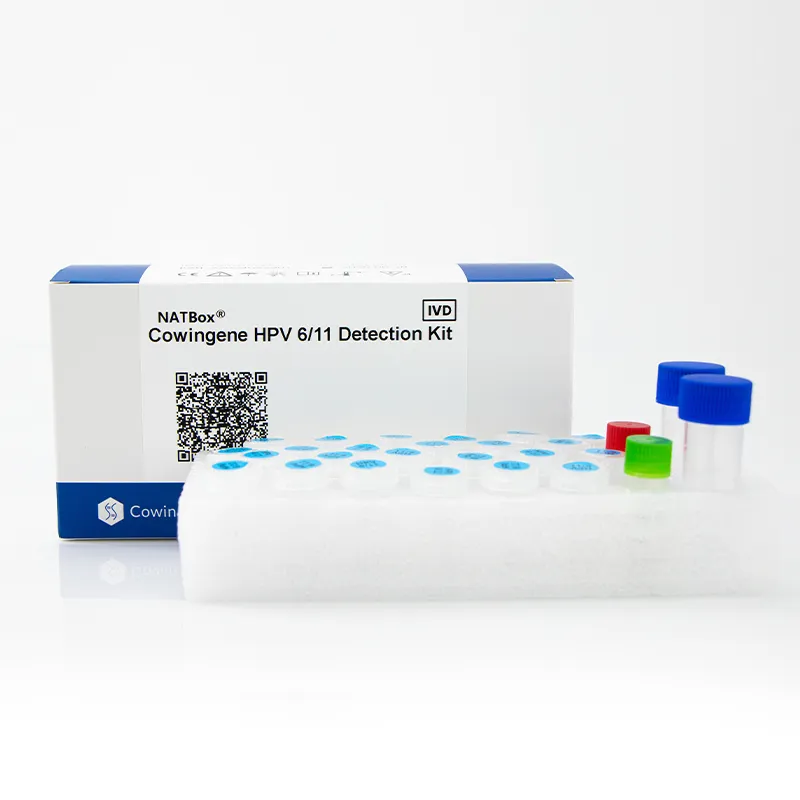
HPV Self Collection Kits: Discreet, Accurate At-Home Test
Hpv Self Collection Kits is a key solution in the healthcare industry, specifically within medical dRead more